
Traction is a Top Treatment Option for Cervical Conditions
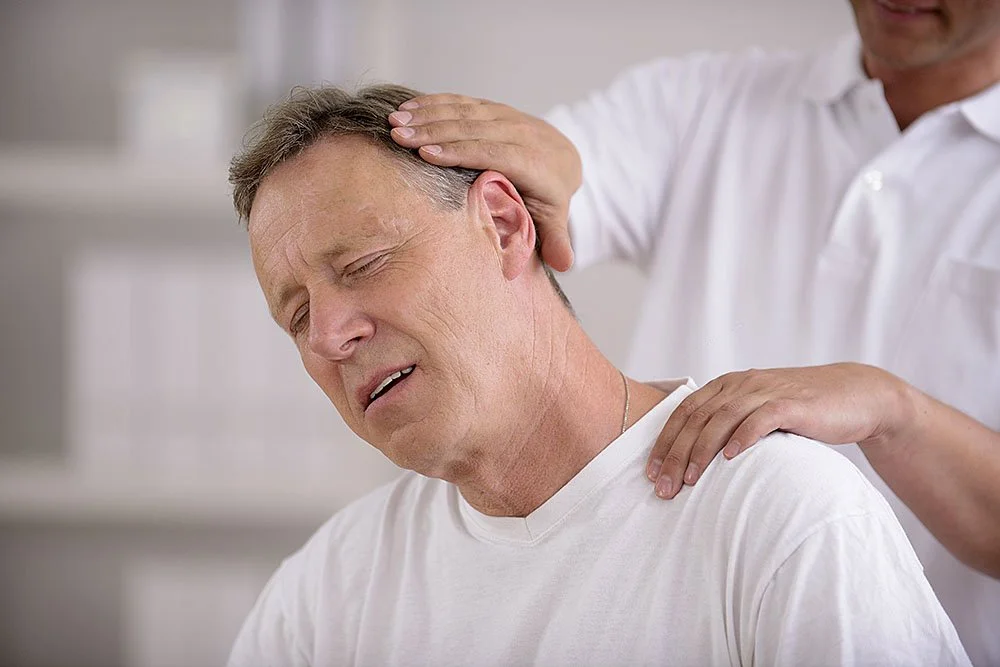
That old saying about something being a “pain in the neck” has its roots in reality. In fact, according to the CDC, in any 3 month period, neck pain affects 15% of US adults. Even more eye-opening is that up to 85% of those affected will be bothered by neck pain again within 5 years.
Healthcare providers, especially chiropractors, physical therapists and osteopathic physicians, see it over and over again. Patients with cervical area issues who present with a stiff neck, chronic tension headache or related symptoms. And while the origin can vary from injury to disorder, the results are generally the same – debilitating pain that deprives patients of work, activities, sleep and general quality of life.
So how common is neck pain?
Neck Pain Affects 1 in 7 Adults & 1 in 5 Veterans
In a large healthcare survey published by the National Center for Health Statistics in 2012, neck pain was the third most common patient complaint among US adults at 15.2%. The study also found the prevalence of low back and neck pain is highest for persons age 45 to 64 years.
Another report published in 2016 on US adults with musculoskeletal pain reveals that 14.3% live with neck pain or neck problems. Interestingly, almost 30% of this group used a practitioner-based approach such as chiropractic or osteopathic manipulation in the past 12 months, too.
For the military, it’s reported that neck pain is common with 1-year prevalence as high as 83% and lifetime prevalence as high as 78%. When asked, Veterans Health Administration (VHA) chiropractors said neck complaints were seen in almost 21% of patients, while 79% of Veteran respondents listed the cervical spine as the second most common region of complaint.
Cervical Traction – A Preferred Treatment Option
As part of the treatment for neck pain, many healthcare providers turn to cervical traction. A survey published in 2017, with responses from over 700 physical therapists, shows that nearly 77% use traction – either with manual methods (92.3%) or mechanical traction tables (88.3%). They often supplement this remedy with other interventions such as exercise, postural education or joint mobilization.
Cervical traction works to relieve neck pain and stiffness by gently stretching muscles and ligaments to release tension and reduce muscle spasms. While helping increase flexibility and range of motion, it also aids decompression of spinal structures that further helps alleviate pain. Intermittent traction – traction performed at specific intervals – may also improve circulation by preventing or reducing adhesions and contractures of cervical structure.
The most common types of traction include:
Clinical Use:
Manual: Delivered by a clinician who applies pressure with the hands. Use of manual traction allows the clinician to change the position of the head: moving it from side to side or gently flexing and extending the cervical spine to assess and relieve symptoms.
Mechanical: Delivered by a clinician who uses a machine with a harness that is attached to the patient’s head. Use of mechanical traction allows the clinician to gently extend the neck, temporarily alleviating pressure on the affected structures in the neck. This can be done continuously or intermittently.
Home Use:
Wall- or Door-Mounted: A patient, either standing or sitting, uses a mounted system of pulleys and weights connected to a head halter that straps around the chin. It allows the gentle stretching of the neck. Self-managing this process requires that patients receive careful instruction by the clinician prior to use.
Pneumatic Supine: A self-contained device with a foam pad that slides on a rail. The patient lies flat on a firm surface with his or her head on the pad with a head strap tightened against the occiput and mastoid processes for stabilization. A hand-held air pump is used to set the desired level of tension, as prescribed by the clinician. The gentle stretching provided by this traction method could be an advantage for those with jaw issues, as it doesn’t put pressure on the mandible.
Pneumatic Pump: A self-contained device featuring foam cushions and an inflatable bladder or bellows. The patient rests his or her neck on a foam cushion, often with a head strap for stabilization. A hand-held air pump is used to inflate the bladder or bellows to the desired tension, as prescribed by the clinician. Some systems can be used on a hard or soft surface, including a bed, couch or sofa. Like with other pneumatic devices, it doesn’t put pressure on the mandible.
What is Pronex® & How is it Different?
Providers, as noted in the study above, who use traction are generally familiar with manual methods and mechanical tables but may be less familiar with home treatment options. Moreover, while some home-use methods like over-the-door have a fair degree of adoption, other treatment options like pneumatic pumps may be less well known.
One pneumatic pump option is Pronex. In use for over 30 years, it’s the first pneumatic pump traction device that uses a bellows to provide an even distraction of the cervical spine. Its design supports the natural curve of the cervical spine and provides two unique advantages: inline and counter traction. This combination creates an even distraction in the anterior and posterior cervical discs. Additionally, because traction is created by pressure applied to the occiput and the trapezius muscles, there is no strain on the temporomandibular joint (TMJ).
The patient’s head and neck are cradled on a pair of foam cushions – one supports the back of the head and the other rests against the top of the shoulders. A bellows between the foam provides up to 35 lbs. of continuously adjustable traction. As the bellows expands, the patient's head moves upward and supports the cervical curve, maintaining an even force that creates space between the cervical vertebrae. This design gives patients complete control over how much traction is applied. Squeezing the single-hand inflator bulb increases the pressure; a release knob reduces it.
Additionally, Pronex is portable and restraint free, which encourages regular use by the patient at home – helping to break the chronic pain cycle. Patients using the device for the shortest periods of time, 2-5 minutes, typically benefit from multiple sessions per day, with 2 hours between treatments. Those taking longer treatments of 10-20 minutes typically find relief with 1-2 treatments a day.
In Summary
With neck pain affecting a significant portion of the US population, it’s no wonder that cervical issues appear in many provider patient populations – both military and civilian. If not part of your treatment plan today, cervical traction is a therapy worthy of consideration and can be optimized to the patient’s needs in clinic or at home.
Take the Next Step
Healthcare Practitioners
If you are interested in a more detailed review Pronex, we invite you to request a demonstration.
Patients
All RS Medical cervical traction devices require a prescription. Talk to your practitioner to see if Pronex could be a fit for you.