
Electrotherapy for Diabetic Neuropathy & Foot Pain
Nearly 25% of Veterans who receive VA care have diabetes, more than double the rate found in the general population. A common complication of diabetes is diabetic neuropathy, which often leads to significant foot pain, impacting patients' mobility, quality of life and – particularly troubling – it’s a leading cause of amputation for those with diabetes. Effective pain management strategies are essential to alleviate discomfort and enhance daily functioning.
Providers unfamiliar with prescription-strength electrotherapy devices, such as the RS-4i® Plus, may be interested to learn how Interferential Therapy (IFT) and Neuromuscular Electrical Stimulation (NMES) can help patients suffering from diabetic neuropathy, as well as other painful foot and lower leg conditions.
Before we begin, let’s provide some definitions:
What is electrotherapy: Electrotherapy involves using electrical energy to stimulate nerves and muscles. It can help reduce pain, improve circulation and promote tissue healing, making it a valuable tool in treating conditions like diabetic neuropathy.
TENS vs Electrotherapy: It’s important to clear up a common misperception – that all electrotherapy devices should be called TENS. While it’s true that Transcutaneous Electrical Nerve Stimulation, or TENS, can be used to describe devices that transmit electrical signals through the skin by way of electrode pads, many are tempted to use this term to describe the entire category. It’s more correct to say that the category should be referred to as electrotherapy, and that lower frequency devices generally available over the counter (OTC) are called TENS units.
What is Interferential Therapy (IFT)? Interferential therapy uses two slightly different high-frequency signals (>5,000 Hz) that intersect within the body to create an area of interference – a “sweet spot” in the treatment area where the therapeutic benefit is most pronounced. The nature of high frequency assures that these signals are able to overcome the skin’s natural resistance, reaching deep into tissue to block pain signals.
What is Neuromuscular Electrical Stimulation (NMES)? Neuromuscular Electrical Stimulation uses a low-frequency signal (<100 Hz) to treat muscle tissue. These low-frequency signals cause skeletal muscle to contract and release in a pattern that acts as a blood and lymphatic fluid pump – i.e., the blood pump mechanism of action. The key benefits of this contract-and-release pattern are that it helps reduce muscle spasms, prevent disuse atrophy, increase circulation and re-educate tissue.
What is Intersperse? Intersperse is a patented treatment session in the RS-4i Plus that intermixes IFT and NMES. During this session, pain relief signals are delivered during the relax period of muscle stimulation – giving the patient a repeating pattern of intermittent contraction, then pain relief, then contraction. This unique intermixing of IFT pain treatment and NMES muscle therapy provokes a beta-endorphin release. These are long-chain peptides (endogenous opiates) that provide pain relief lasting up to 8 hours.
Breaking Down a Treatment: How the RS-4i Plus Treats Diabetic Neuropathy & Foot Pain
Step One: Pain Relief with IFT: Patients with Diabetic Neuropathy are in pain. Addressing this pain first is key to successful treatment and patient adoption. During the initial segment of treatment, a high-frequency signal penetrates deep into tissue to hyper-stimulate A-beta nerve fibers and provide fast-acting pain relief via the Gate Control Theory. This stimulation can also trigger the body’s production of enkephalins – short-chain peptides (endogenous opiates) that provide pain relief lasting up to an hour.
Step Two: Muscle Rehabilitation with NMES: After the segment of IFT, the RS-4i Plus delivers NMES to facilitate muscle rehabilitation. For diabetic neuropathy patients, NMES can be used on muscles of the lower leg to stimulate blood flow – causing muscles like the gastrocnemius to fire – supplying a flow of oxygen and nutrient-rich blood to the foot, while expelling metabolic waste.
Step Three: Intersperse Combines both IFT and NMES: As the patient sits undisturbed, the third and most unique segment begins. It consists of RS Medical’s patented Intersperse technology, which combines IFT pain relief and NMES rehabilitative muscle stimulation in a single treatment. With Intersperse, during the “relax” period of muscle stimulation, pain relief signals are delivered. The treatment is knocking down the pain, then working the muscle in a repeating pattern. This leads to shorter treatment times and avoids the need for patients to move electrodes, which is required by other devices on the market.
This high-powered combination of IFT and NMES can even help provoke the body’s a beta-endorphin release. These neuroinhibitors are long-chain peptides - endogenous opiates – that provide pain relief lasting up to 8 hours. All of which helps these patients begin to break the cycle of debilitation.
Electrode Placement for Diabetic Neuropathy & Foot Pain
Below you view electrode pad placement for Diabetic Neuropathy and foot pain. If you have specific questions on placement, please contact our team or request a demonstration using the form below.
The RS-4i Plus Versus an Over-the-Counter TENS Unit
The RS-4i Plus is a prescription-strength electrotherapy device that, while often called a TENS unit, has little in common with over-the-counter TENS devices.
Higher Frequency Leads to Deeper Penetration: Many over-the-counter TENS devices have a frequency of 50 Hz. This low-frequency signal can only provide relief through “distraction” – diverting attention away from the pain sensation – meaning that the device has to be worn on a continual basis. Once it’s removed, the pain relief also stops.
In comparison, the RS-4i Plus has a frequency of 5,000 Hz. This high-frequency signal allows the RS-4i Plus to overcome skin’s natural resistance, reaching nerve fibers deep in the tissue to send a signal that triggers the body to release neuropeptides that block the transmission of pain signals.
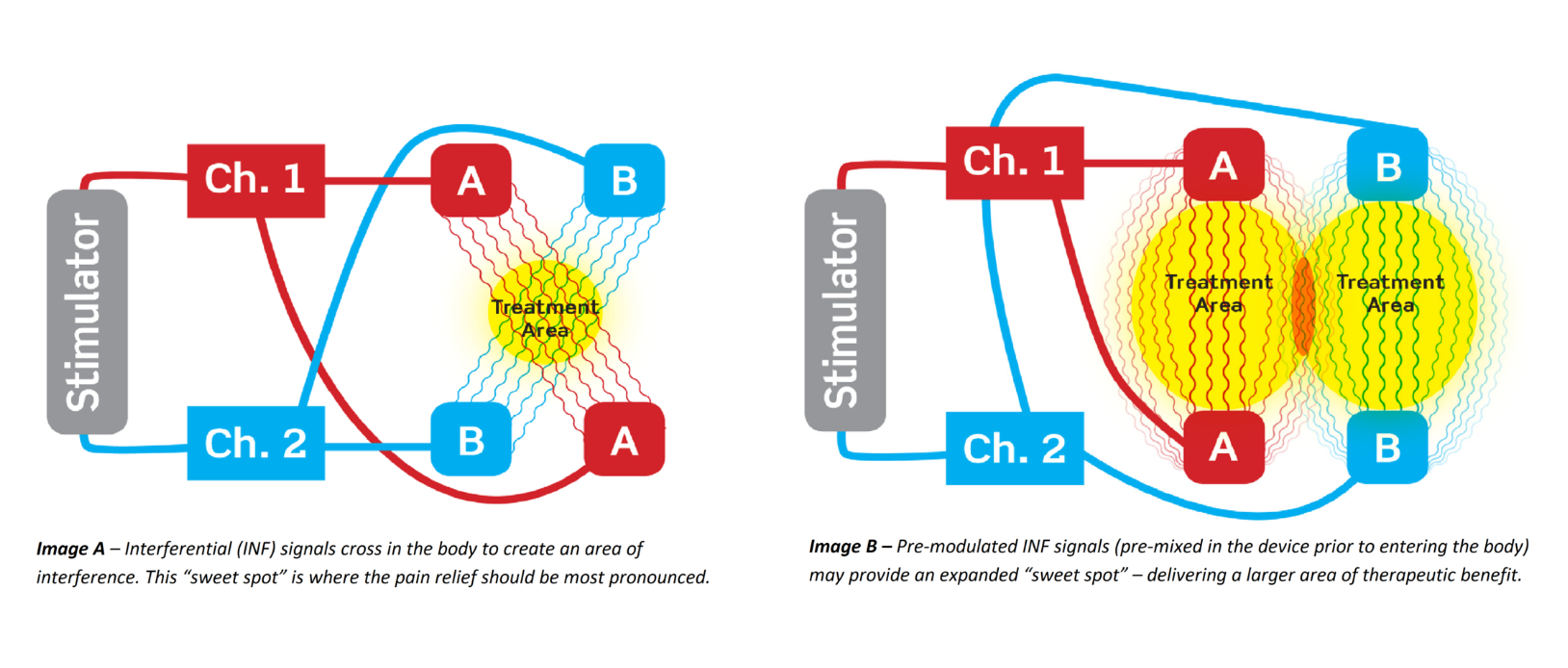
Premodulation Leads to a Larger Treatment Area: Some electrotherapy devices on the market, provide IFT by crossing electrodes on the patient’s body to intersect different frequency signals. Where the signals cross in the treatment area is where the therapeutic benefit is most pronounced. (Image A)
The signals from the RS-4i Plus are premodulated, meaning that the current for each channel is pre-mixed within the device, as opposed to inside the body. Because signals are pre-mixed, the area of interference stretches between each set of electrodes, not just where signals intersect. The result is that premodulated IFT provides a significantly broader area of pain relief. (Image B)
Benefits of Electrotherapy for Other Foot & Ankle Conditions
While helping alleviate the effects of diabetic neuropathy is key, this isn’t the only foot-related condition that can benefit from the RS-4i Plus. It’s also useful for treating the pain caused by plantar fasciitis, rheumatoid arthritis, gout and other afflictions of the foot and lower leg.
Additionally, any of these conditions can benefit from the increased blood flow provided by NMES to help prevent muscle spasms and curb atrophy, which can help improve ambulatory ability. And with patients self-reporting 4 or more hours of pain relief after a 35-minute treatment, it’s a therapeutic option worth considering.
Designed for At-Home Pain Management
The RS-4i Plus is designed for at-home use, and all aspects of patient training can be managed remotely. Once the unit has been prescribed, it is shipped to the patient at home. The patient then receives a personalized virtual fitting and training on the device with an RS Medical representative, which enables them to follow the prescribed treatment plan independently. Because it’s self-administered and simple to use, it goes a long way toward improved patient compliance.
By having treatments that patients can self-manage – whether that’s during the day or the middle of the night – they can get the necessary treatment in their actual moments of need.
Take the Next Step
Healthcare Practitioners
If you are interested in a more detailed review of the RS-4i Plus mechanisms of action and clinical evidence, we invite you to request a demonstration.
Patients
The RS-4i Plus requires a prescription. If you are interested in discussing this drug-free pain relief solution with your healthcare practitioner, download our patient discussion guide to help start a conversation.