
4 Painful Musculoskeletal Conditions that Can Be Treated with Electrotherapy

There’s no shortage of conditions that cause chronic musculoskeletal pain. Several of the most common affect the upper and lower back, but these disorders can range from our necks to our feet. Not surprisingly, there’s also no shortage of treatment options – including physical therapy, medications, surgery and more. But there’s no simple fix and, as opioids have shown, no magic pill.
There is, however, one doctor-prescribed treatment that’s proving to be effective for treating these musculoskeletal conditions: the RS-4i® Plus, an at-home electrotherapy device that delivers non-invasive pain relief and muscle rehabilitation.
Here are four painful musculoskeletal conditions that can be treated with electrotherapy:
Chronic Back Pain
Sciatica
Diabetic Neuropathy
Frozen Shoulder
Before we begin, let’s start with some definitions:
What is electrotherapy: Electrotherapy involves using electrical energy to stimulate nerves and muscles. It can help reduce pain, improve circulation and promote tissue healing, making it a valuable tool in treating musculoskeletal conditions.
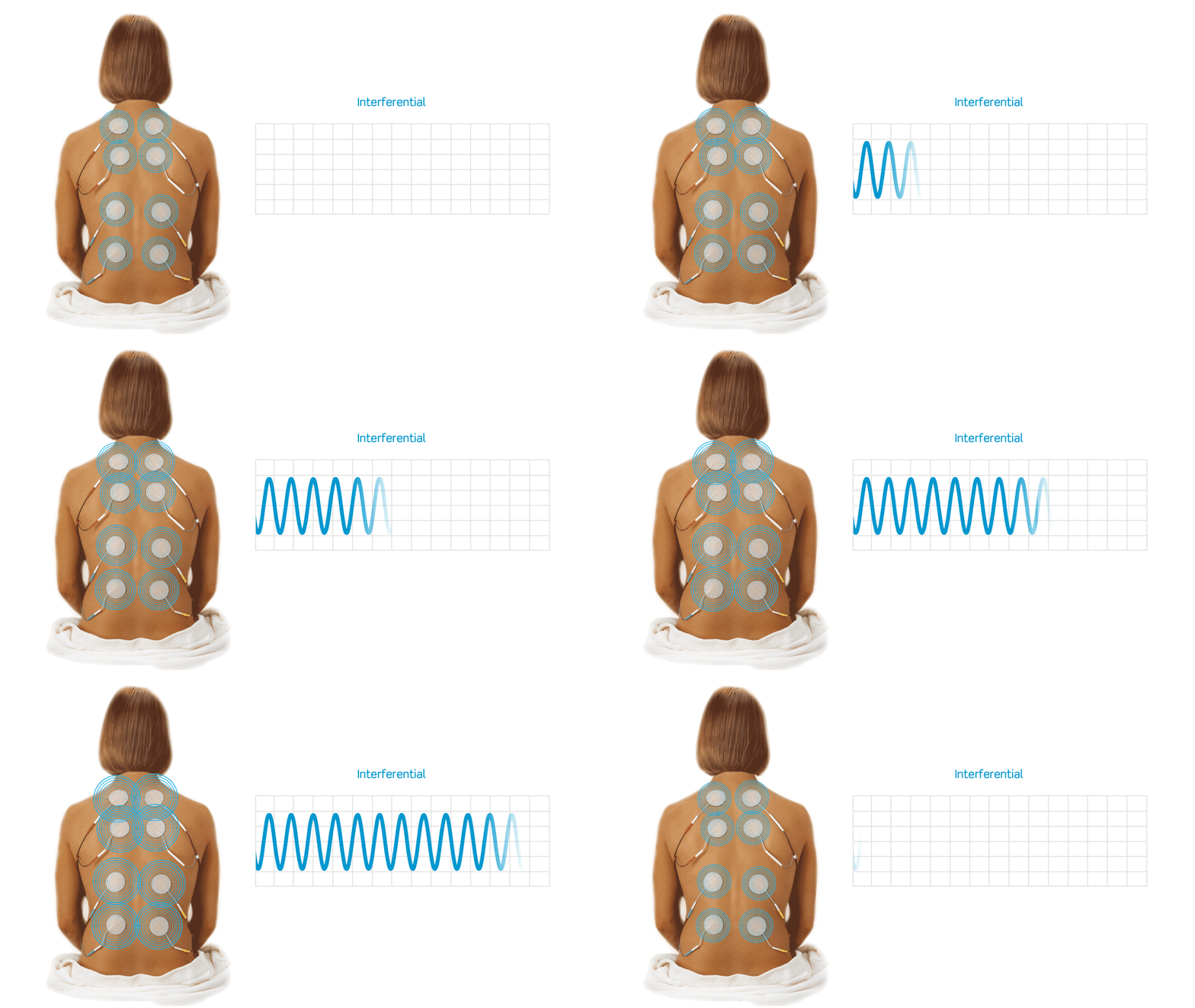
What is Interferential Therapy (IFT)? Interferential therapy uses two slightly different high-frequency signals (>5,000 Hz) that intersect within the body to create an area of interference – a “sweet spot” in the treatment area where the therapeutic benefit is most pronounced. These high-frequency signals overcome the skin’s natural resistance and reach deep into the tissue, providing rapid pain relief through the release of enkephalins – endogenous opiates that deliver pain relief that lasts about an hour.
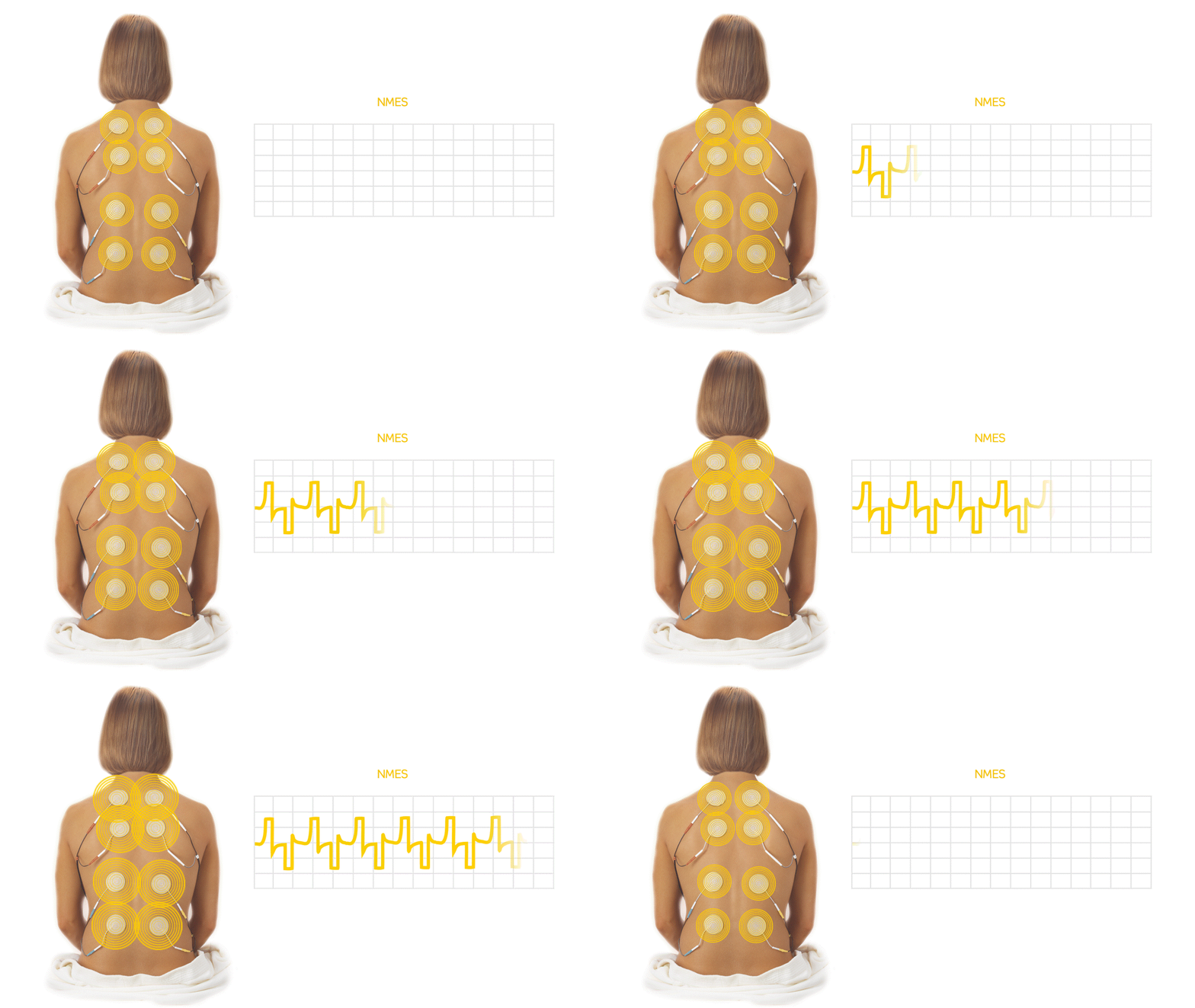
What is Neuromuscular Electrical Stimulation (NMES)? Neuromuscular Electrical Stimulation (NMES) uses lower-frequency currents (< 100 Hz) to treat muscles. These low-frequency signals cause skeletal muscle to contract and release in a pattern that acts as a blood and lymphatic fluid pump – i.e., the blood pump mechanism of action. The key benefits of this contract-and-release pattern are that it helps prevent muscle spasms and disuse atrophy, increases circulation and re-educates tissue.
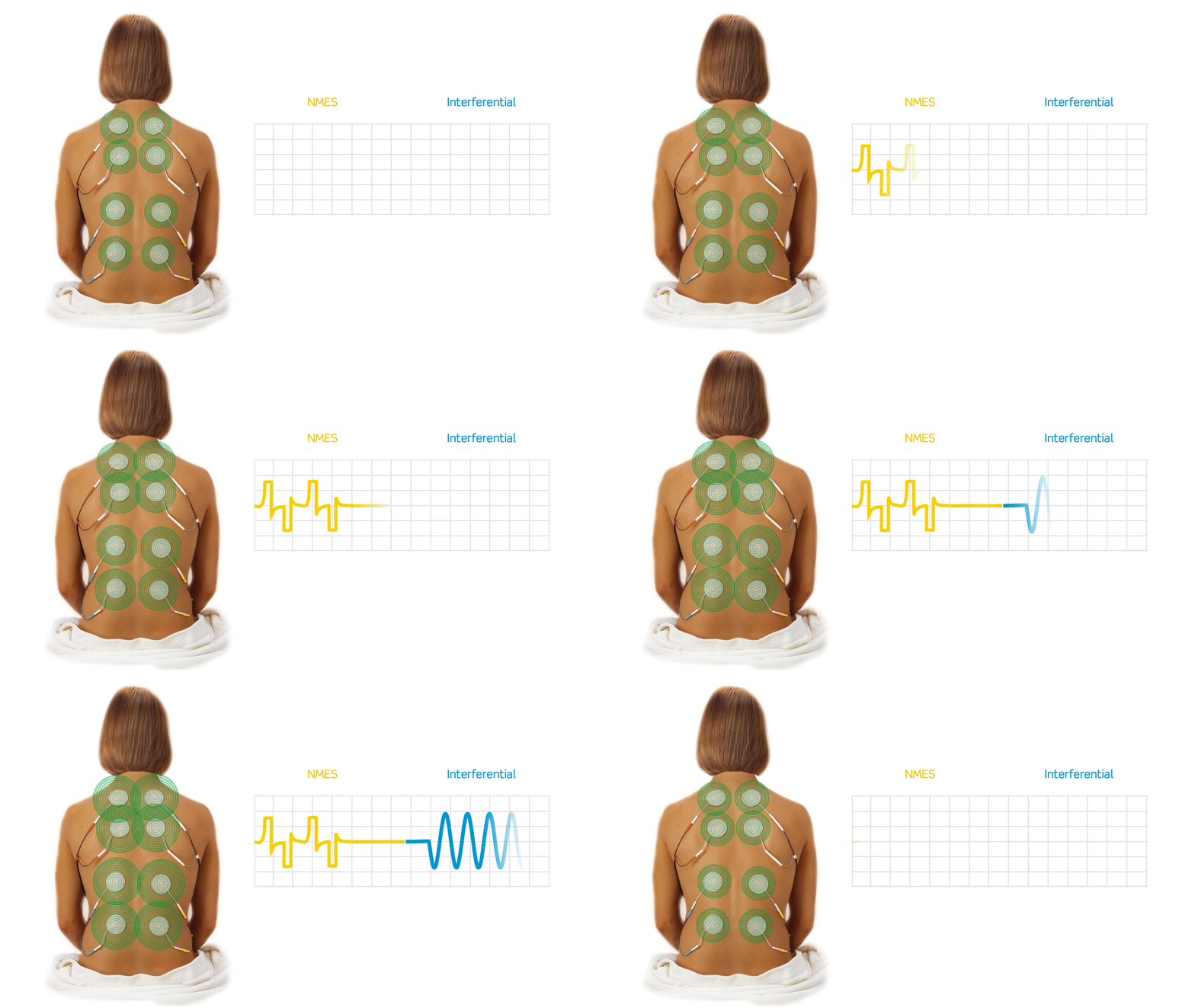
What is Intersperse?: Intersperse is a patented treatment session in the RS-4i Plus that intermixes IFT and NMES. During this session, pain relief signals are delivered during the relax period of muscle stimulation – giving the patient a repeating pattern of intermittent contraction, then pain relief, then contraction. This unique intermixing of IFT pain treatment and NMES muscle therapy provokes a beta-endorphin release. These are long-chain peptides (endogenous opiates) that provide pain relief lasting up to 8 hours.
Chronic Back Pain
Before considering a spinal implant or other surgical procedures, know that the RS-4i Plus is a prescription-grade option that’s non-invasive, drug free and has provided pain relief for 84% of patients who use it.*
What makes this extended relief possible? The key is the patented Intersperse program, an innovative combination of pain control and muscle rehab therapy that helps trigger release of the body’s natural painkillers – endorphins – which can provide pain relief that typically lasts 4 to 8 hours.
For pain relief, the RS-4i Plus delivers a 5,000 Hz high-frequency Interferential Therapy (IFT) signal. In contrast, many over-the-counter electrotherapy units only offer 50 to 250 Hz. The 5,000 Hz frequency penetrates deeper into tissues, effectively reaching the nerves responsible for chronic back pain. Lower-frequency devices simply lack the power to go as deep and, thus, are unlikely to produce the same degree of pain relief.
Along with pain-blocking capabilities, the RS-4i Plus also provides a custom Neuromuscular Electrical Stimulation (NMES) waveform at 71 Hz that can activate both fast- and slow-twitch muscle fibers. Being able to stimulate a broader range of muscle fibers, especially in the large muscles of the body like the back, allows the RS-4i Plus to elicit a maximal muscle contraction that supplies a flow of oxygen and nutrient-rich blood to the muscles while expelling metabolic waste. This helps to improve blood flow and relax muscle spasms – which, in turn, helps further reduce back pain.
There are many electrode placement options for patients who are suffering from chronic back pain. Below are videos that cover lower back, mid back, upper back and full back treatments. Additionally, we offer both full-back and low-back garments that make placement electrodes in the right spot easy.
Below are electrode pad placement guides for lower back, mid back, upper back, and full back treatments with the RS-4i Plus.
*After 30 days of treatment, 84% of patients experienced pain relief. Data was collected from 15,741 patients by RS Medical representatives in person and over the phone. The assessment questions used have been adapted from the Defense & Veterans Center for Integrative Pain Management (DVCIPM) Defense & Veterans Pain Rating Scale (DVPRS) and Supplementary Questionnaire.
Sciatica
Sciatica is a common chronic back condition, affecting up to 40 % of the population. While many cases resolve favorably, research suggests that roughly 1 in 4 patients will have persistent problems.
While over-the-counter medications may provide a partial answer, another ideal choice for sciatica treatment is the RS-4i Plus, which is a prescription-grade at-home electrotherapy device. Not only is it non-invasive and drug-free, but 45% of patients experience a 50% reduction in pain.*
How does it work to help patients suffering from sciatica? First, it blocks the transmission of pain signals with high-frequency Interferential Therapy (IFT).
The pain-relieving signal provided by the RS-4i Plus is 5,000 Hz. In comparison, many over-the-counter electrotherapy units may only deliver 50 to 250 Hz. A signal at 5000 Hz, which is also called a high-frequency signal, matters because it’s able to penetrate deeper into the tissue to block pain signals. By contrast, lower-frequency signals simply lack the power to go as deep and, thus, are unlikely to produce the same degree of pain relief
Second, the RS-4i Plus also provides neuromuscular electrical stimulation (NMES) through a custom 71 Hz waveform that causes both fast- and slow-twitch muscle fibers to contract. These muscle contractions supply a flow of oxygen and nutrient-rich blood to the muscles, while expelling metabolic waste. This helps patients suffering from sciatica reduce muscle spasms and atrophy and re-educate muscle.
Third – and this is key – is the patented Intersperse program, which is a unique combination of IFT pain control and NMES muscle therapy that helps trigger release of the body’s natural painkillers – endorphins – which can provide pain relief that typically lasts 4 to 8 hours.
Below are two pad placement options for a sciatica treatment that covers the upper leg and lower back.
*After 30 days of treatment, 50% of patients experienced a 50% reduction in pain. Data was collected from 15,741 patients by RS Medical representatives in person and over the phone. The assessment questions used have been adapted from the Defense & Veterans Center for Integrative Pain Management (DVCIPM) Defense & Veterans Pain Rating Scale (DVPRS) and Supplementary Questionnaire.
Diabetic Neuropathy
Diabetic neuropathy can be a difficult condition to treat. It’s the most common complication of diabetes mellitus (DM), and it affects as many as 50% of patients with type 1 and type 2 DM. It impacts nearly all areas of a person’s health and, particularly troubling, it can also lead to amputation.
Patients with diabetic neuropathy are in pain. Addressing this pain first is key to successful treatment and patient adoption. Many patients who use the RS-4i Plus say their pain relief lasts from 4-8 hours. So, what makes this extended relief possible? The key is the patented Intersperse program, an innovative combination of pain control and muscle rehab therapy that helps trigger release of the body’s natural painkillers – endorphins – which provide pain relief that can last up to 8 hours.
Specifically for pain relief, the RS-4i Plus delivers a 5,000 Hz high-frequency Interferential Therapy (IFT) signal. In contrast, many over-the-counter electrotherapy units only offer 50 to 250 Hz. The 5,000 Hz frequency penetrates deeper into tissues, effectively reaching the nerves responsible for chronic back pain. Lower-frequency devices simply lack the power to go as deep and, thus, are unlikely to produce the same degree of pain relief.
Along with pain-blocking capabilities, the RS-4i Plus also provides a custom Neuromuscular Electrical Stimulation (NMES) waveform at 71 Hz that can activate both fast- and slow-twitch muscle fibers. NMES can be used on muscles of the lower leg to stimulate blood flow – causing muscles like the gastrocnemius to fire – supplying a flow of oxygen and nutrient-rich blood to the foot, while expelling metabolic waste. This helps to improve blood flow and relax muscle spasms – which, in turn, helps further reduce back pain.
Here are electrode pad placement videos for both foot pain and lower leg pain that can be caused by Diabetic Neuropathy.
Frozen Shoulder
Patients with shoulder injuries know that they present significant range-of-motion treatment challenges. Specifically, frozen shoulder often requires continuous physical therapy to “loosen” the joint.
And while this condition is considered to be fairly common – statistics show up to 20% of adults will suffer its effects – frozen shoulder mainly affects those over 40, as well as those with diabetes, thyroid issues and heart disease.
Shoulder conditions, such as frozen shoulder, are a primary reason why the RS-4i Plus includes Alternating Neuromuscular Electrical Stimulation (NMES) as a treatment option. By strategically placing electrode pads on muscles responsible for shoulder joint movements and then stimulating “alternate” sets of these pads, the RS-4i Plus can mimic movements used during everyday life, PT sessions and while exercising.
In addition to muscle rehabilitation, the RS-4i Plus delivers lasting pain relief with high-frequency Interferential Therapy (IFT). High frequency means that the RS-4i Plus delivers a signal at 5,000 Hz. In contrast, over-the-counter electrotherapy devices may only deliver a 50-250 Hz signal. This matters because the higher the frequency, the deeper the signal can penetrate the tissue to block pain signals. By contrast, lower-frequency devices simply lack the power to go as deep and, thus, are unlikely to produce the same degree of pain relief.
The best part – and this is key – is the patented Intersperse program, which is a unique combination of IFT pain control and NMES muscle therapy that helps trigger release of the body’s natural painkillers – endorphins – which can provide pain relief that typically lasts 4 to 8 hours.
Take a look at our video below to see the optimal placement for Frozen Shoulder treatment.
Breaking Down a Treatment: How the RS-4i Plus Treats Musculoskeletal Pain
In one 35-minute treatment, patients receive the benefits of both Interferential Therapy and Neuromuscular Electrical Stimulation. Here is a breakdown of a 35-minute treatment:
Step One: Pain Relief with Interferential Therapy (IFT): Addressing musculoskeletal pain first is key to successful treatment. This is why the RS-4i Plus begins with 5 minutes of Interferential Therapy (IFT), which blocks the transmission of pain signals.
Step Two: Muscle Rehabilitation with Neuromuscular Electrical Stimulation (NMES): After the Interferential Therapy has run, the RS-4i Plus delivers Neuromuscular Electrical Stimulation (NMES) which causes both slow- and fast-twitch muscle fibers to contract. These muscle contractions supply a flow of oxygen and nutrient-rich blood to the muscles, while expelling metabolic waste.
Step Three: Intersperse Combines both IFT and NMES: As the patient sits undisturbed, the third and most unique segment begins. It consists of RS Medical’s patented Intersperse technology, which combines IFT pain relief and NMES rehabilitative muscle stimulation in a single treatment. With Intersperse, during the “relax” period of muscle stimulation, pain relief signals are delivered. The treatment is knocking down the pain, then working the muscle in a repeating pattern. This leads to shorter treatment times and avoids the need for patients to move electrodes, which is required by other devices on the market.
This high-powered combination of IFT and NMES can even help provoke the body’s a beta-endorphin release. These neuroinhibitors are long-chain peptides – endogenous opiates – that provide pain relief lasting up to 8 hours.
The combination of reducing pain with IFT and improving blood flow to the treatment area with NMES is what makes the RS-4i Plus such an effective treatment option for patients with musculoskeletal pain.
Take the Next Step
Healthcare Practitioners
If you are interested in a more detailed review of the RS-4i Plus mechanisms of action and clinical evidence, we invite you to request a demonstration.
Patients
The RS-4i Plus requires a prescription. If you are interested in discussing this drug-free pain relief solution with your healthcare practitioner, download our patient discussion guide to help start a conversation.