
How to Compare Electrotherapy Devices: Review of Signal Type
More and more practitioners are turning to non-narcotic treatments to help chronic pain patients manage their conditions. While many have already discovered that electrotherapy is among the top choices for effective, drug-free pain relief and muscle rehab, wading through the countless device options to find the right one is nearly impossible. From TENS to IFT and NMES to Galvanic, how does one decide which unit will be best?
Knowing that electrotherapy signals are “tuned” for different purposes – for instance, causing a muscle to contract or preventing a nerve from transmitting pain signals – presents a guide to understanding the therapeutic value of each. This is also the first step to determining the device that’s the optimal fit.
Reader note: This article is part of a series that explores how to compare electrotherapy devices. See our other post that discusses how to evaluate units by therapeutic function.
Is it TENS or Electrotherapy?
Before diving into this analysis, it’s important to clear up a common misperception – that all electrotherapy devices should be called TENS.
While it’s true that Transcutaneous Electrical Nerve Stimulation, or TENS, can be used to describe devices that transmit electrical signals through the skin by way of electrode pads, many are tempted to use this term to describe the entire category.
It’s more correct to say that the category should be referred to as electrotherapy, and that lower frequency devices generally available over the counter (OTC) are called TENS units.
Exploring 5 Signal Types Used for Electrotherapy
Each type of electrotherapy signal has a place in the arsenal of tools available to practitioners caring for patients with painful musculoskeletal conditions. However, the “right” signal will depend largely on the diagnosis and prior treatment outcomes.
1. Neuromuscular Electronic Stimulation (NMES)
NMES uses alternating low-frequency signals (<100 Hz) to treat muscle tissue. These low-frequency signals engage lower motor neurons, causing skeletal muscle to contract and release in a pattern that acts as a blood and lymphatic fluid pump – i.e., the blood pump mechanism of action.
The key benefits of this contract-and-release pattern are that it helps expel metabolic waste and supplies a flow of oxygen- and nutrient-rich blood to the muscles. NMES treatments help relieve muscle spasms, prevent disuse atrophy, increase circulation, increase range of motion and re-educate tissue.
Treatments are usually short and taken daily at home or in-clinic. Intensity settings are adjusted by the user. Treatment with 2 electrodes may be sufficient, or patients can use 4 electrodes to treat a larger area.
Waveform:
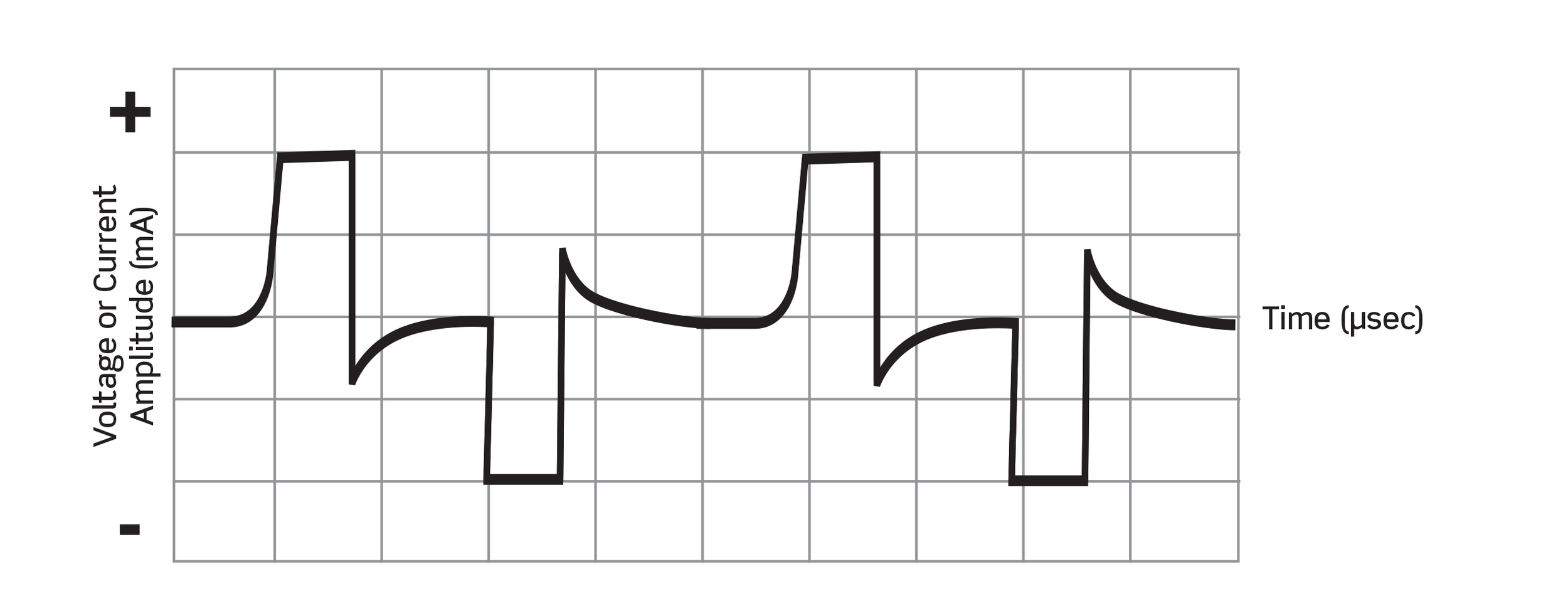
Sample NMES waveform
Indications for NMESs
Relax muscle spasm
Prevention or retardation of disuse atrophy
Maintain or increase range of motion
Increase local blood circulation
Re-educate muscle
Immediate post-surgical stimulation of calf muscles to prevent venous thrombosis
Contraindications: (see below)
2. TENS Stimulation
An electrotherapy unit called TENS delivers a low-frequency (<150 Hz) alternating current to a focused treatment area. Due to the nature of low-frequency, these signals only allow superficial penetration of tissue and result in TENS units providing pain relief via “distraction” – diverting attention away from the pain sensation. As such, these units are often worn continuously and provide little or no relief once treatment has stopped. Intensities are user-adjustable on most devices.
Waveform:
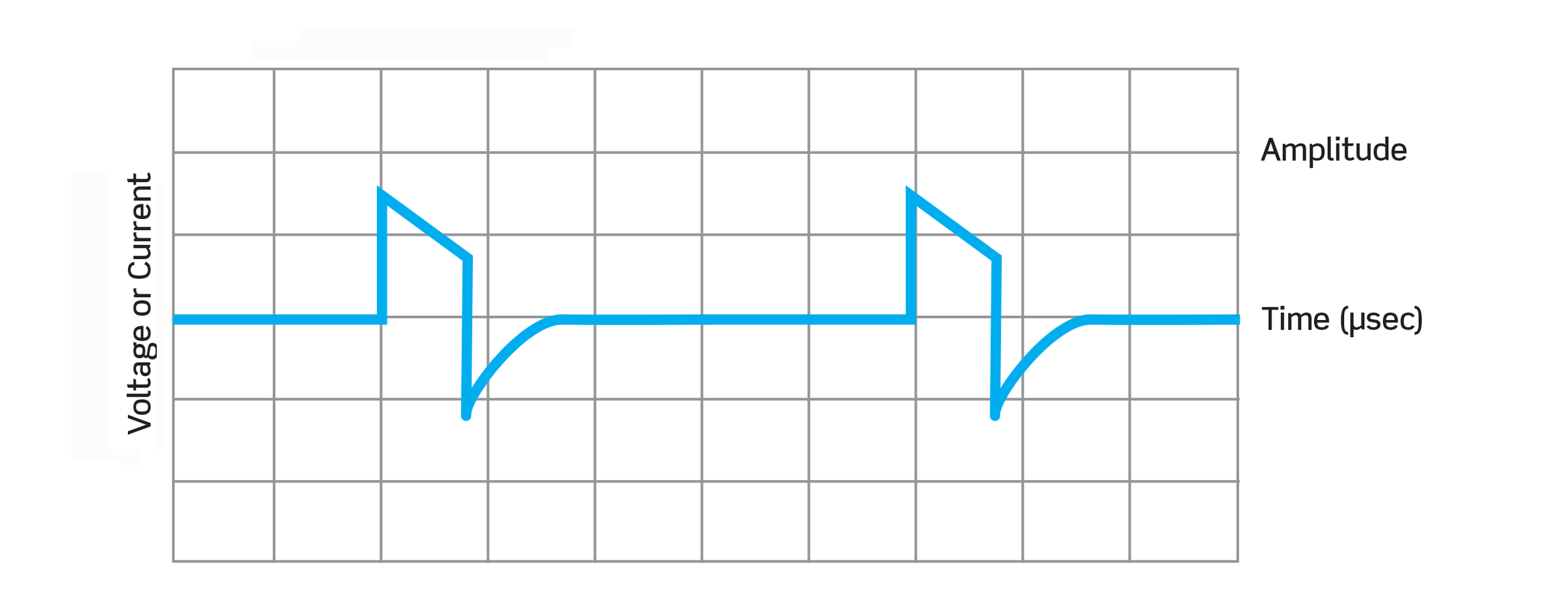
Sample over-the-counter TENS device waveform
Indications for TENS:
Symptomatic relief of chronic pain
Contraindications: (see below)
3. Interferential Stimulation (IFT)
Interferential therapy uses two slightly different high-frequency signals (>5000 Hz) that intersect within the body to create an area of interference – a “sweet spot” in the treatment area where the therapeutic benefit is most pronounced.
The nature of high-frequency assures that these signals are able to overcome skin’s natural resistance, reaching deep into tissue to hyper-stimulate A-beta nerve fibers and provide fast-acting pain relief via the Gate Control Theory. According to Gate Theory, this stimulation can trigger the body’s production of enkephalins – short-chain peptides (endogenous opiates) that provide pain relief lasting about 1 hour.
IFT treatments are generally about 30 minutes, and taken daily at home or in a physical therapy clinic. Signal intensities are adjustable by the user or clinician.
Waveform:
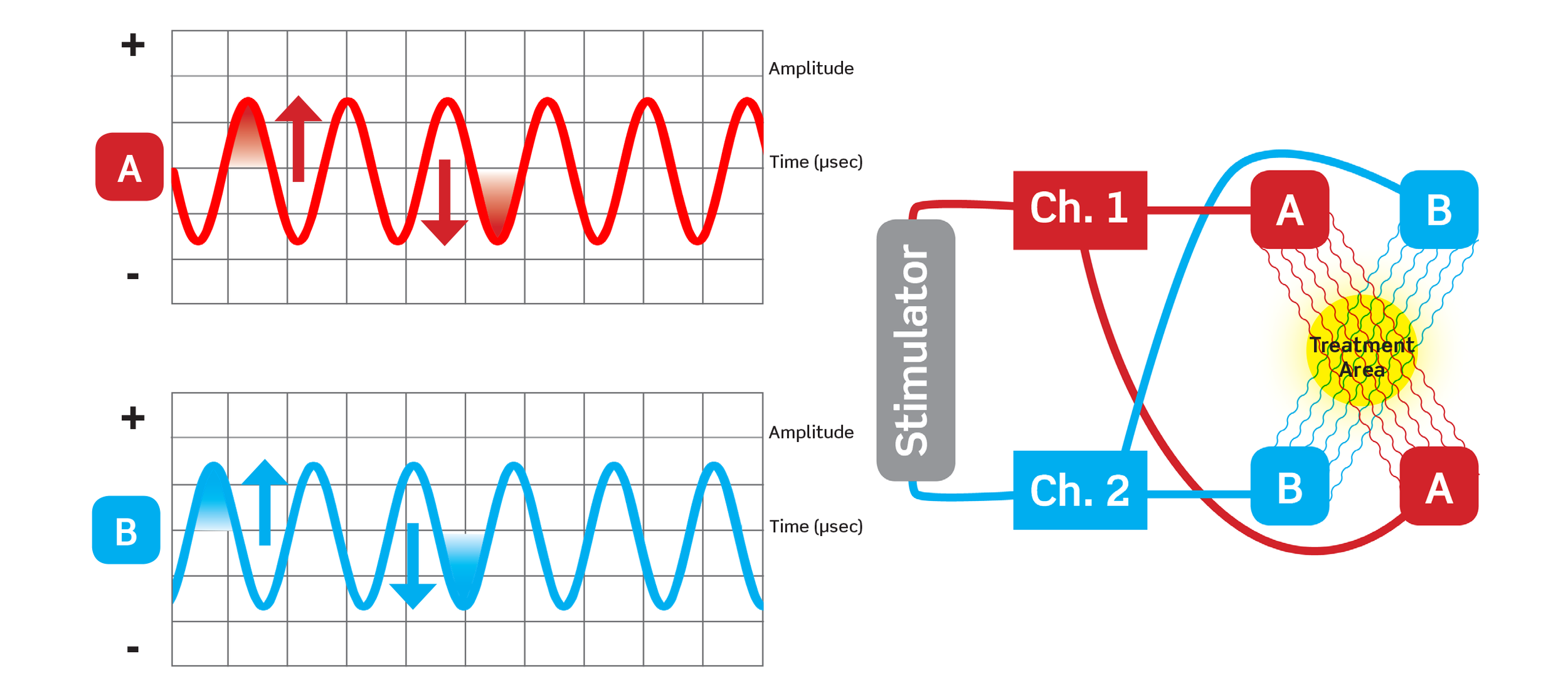
Traditional IFT waveforms (at left above) cross in the body to create an area of interference that delivers pain relief in the treatment area (at right above)
Indications for IFT:
Relieve acute pain
Relieve and manage chronic pain
Contraindications: (see below)
4. Premodulated Interferential Stimulation (Premodulated IFT)
Premodulated IFT differs from traditional IFT in that the current for each channel is pre-mixed within the device, as opposed to inside the body. The key benefit of this type of stimulation is that it creates an expanded treatment area.
Because signals are pre-mixed, the area of interference stretches between each set of electrodes, not just where signals intersect. The result is that premodulated IFT provides a significantly broader area of pain relief, allowing for the treatment of large body areas particularly when using 4 electrodes.
An additional advantage of premodulation is that the electrode pads do not need to be repositioned for NMES muscle therapy after taking an IFT treatment. A few home-use devices, like RS Medical’s RS-4i® Plus, offer this benefit. While the primary value is for larger areas, it can also be useful when treating small muscle groups or joints (elbow, ankle, foot) where only two electrodes can be used due to space limitations.
Premodulated IFT treatments are generally about 30 minutes, and taken daily at home or in a physical therapy clinic. Signal intensities are adjustable by the user or clinician.
Waveform:
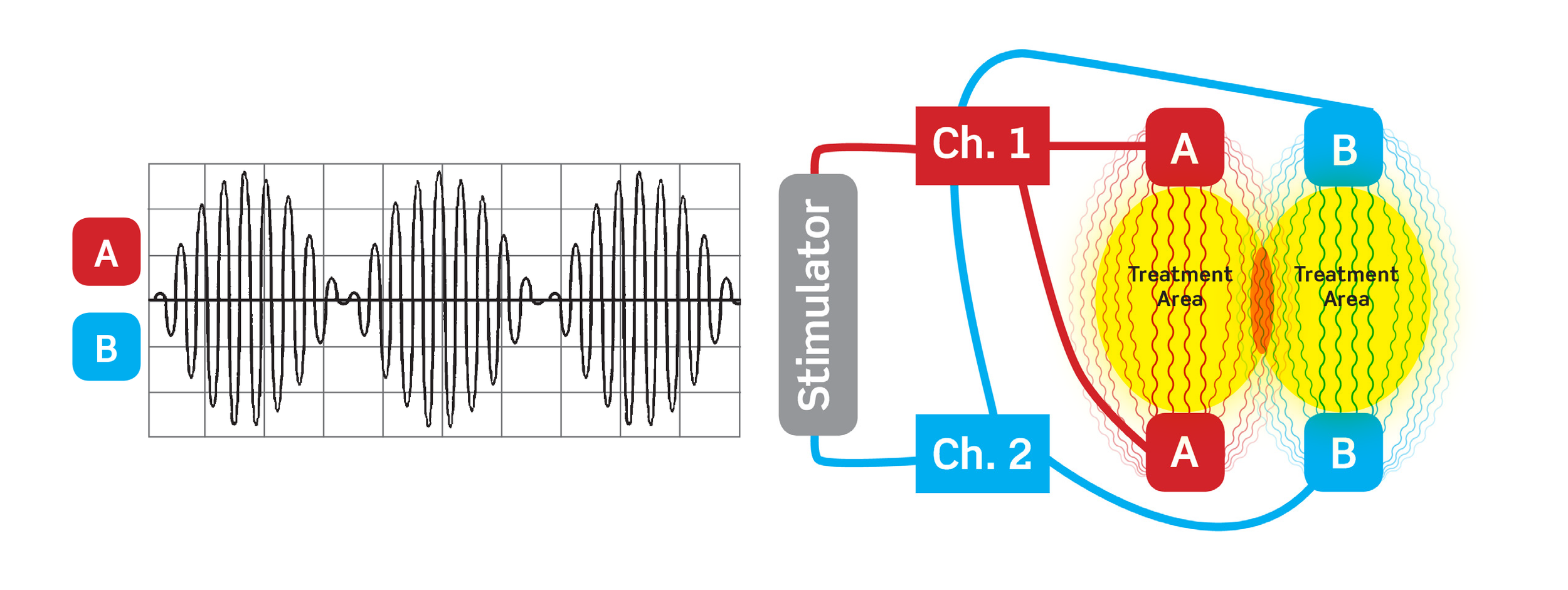
Premodulated IFT signals (at left above) are pre-mixed in the device prior to entering the body and provide an expanded area of therapeutic benefit (at right above)
Indications for Premodulated IFT:
Relieve acute pain
Relieve and manage chronic pain
Contraindications: (see below)
Intersperse:
Did you know that there’s a device that can combine Premodulated IFT and NMES together in the same 35-minute treatment session called Intersperse? It’s the RS-4i Plus, and it’s the most advanced personal electrotherapy device available. In fact, nearly half of patients say they get a 50% reduction in pain after using the device for 30 days.
5. Galvanic Stimulation
Galvanic stimulation applies high-voltage direct current to reduce edema in acute injuries associated with major tissue trauma. Direct current creates an electrical field over the treated area that, theoretically, changes blood flow. The positive pad behaves like ice, causing reduced circulation to the area and a reduction in swelling. The negative pad behaves like heat, causing increased circulation and faster healing.
Galvanic treatments are generally taken daily at home, although patients may periodically take them in-clinic.
Waveform:
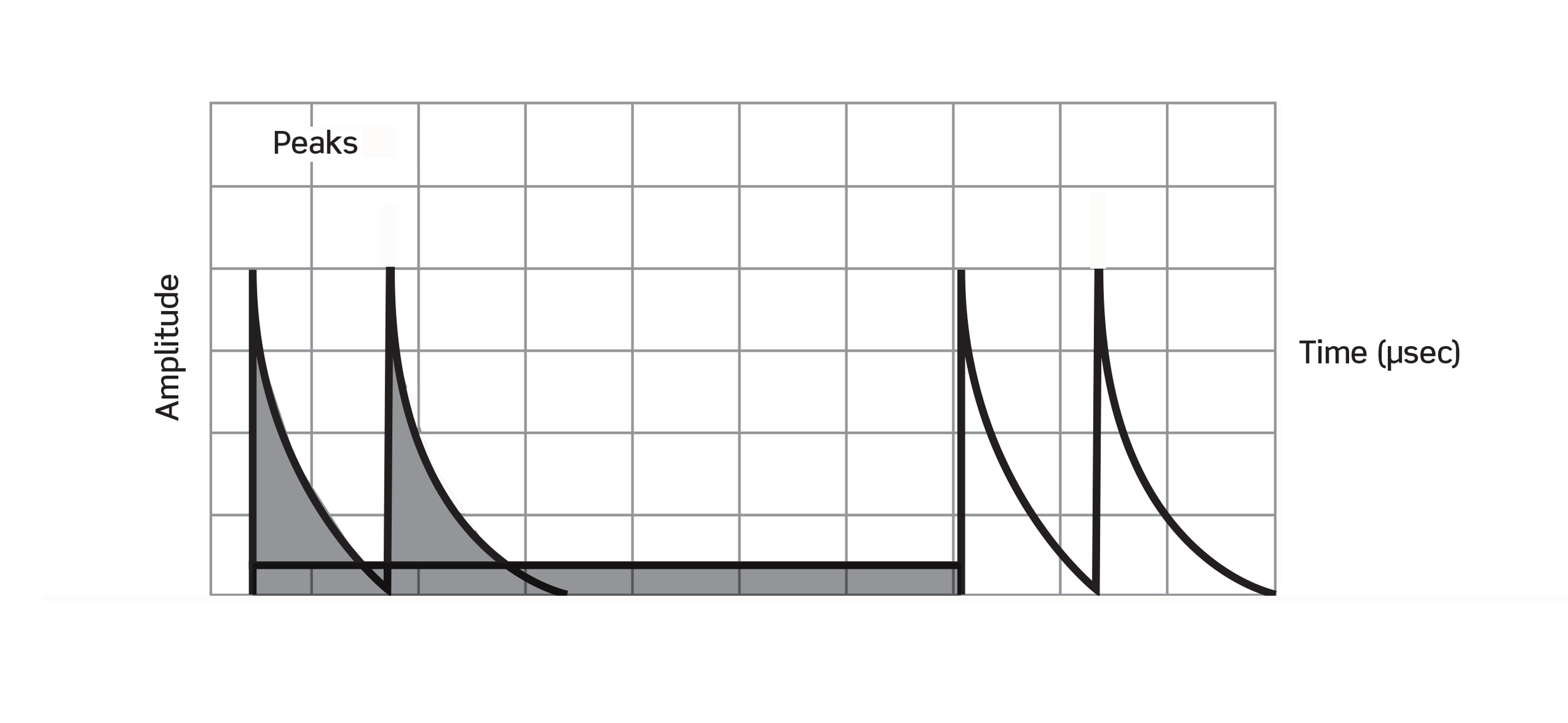
Sample waveform of Galvanic
Indications for Galvanic:
Impaired perfusion or circulation
Inflammation
Edema
Peripheral neuropathy
Contraindications: (see below)
Shared Contraindications for all Electrotherapy
Electrotherapy devices, regardless of device type, share the following contraindications:
Electrotherapy should not be used to treat symptomatic local pain unless the cause of the pain has been clearly diagnosed
Electrotherapy should not be used in areas of the body where cancerous lesions exist
Electrotherapy should not be applied in areas of the skin that are swollen, infected or inflamed (e.g. varicose veins)
Electrotherapy should not be used on patients who have a cardiac pacemaker, implanted defibrillator, or other implanted metallic or electronic device because this may cause electric shock, burns, electrical interference, or death
Electrotherapy should not be applied to the anterior neck (carotid sinus) or through the head
Patients suspected of having serious infectious diseases or diseases that require heat or fevers to be suppressed should not be treated with electrotherapy
Women who are pregnant should avoid electrotherapy treatment, as safe use has not been established for pregnancy
Next Steps
Knowing that all electrotherapy devices are not the same is the first step in understanding the category. Taking a deeper dive into what makes them different reveals that there are 5 signal types with varying indications for use – the distinctions of which can help healthcare providers hone in on a particular therapy, and ultimately device, that will be most beneficial for each patient’s condition.
Those wishing to read more about electrotherapy may want to review the scientific articles listed below or visit PubMed for additional articles:
We Invite You to Learn More
Practitioners
If you are interested in a more detailed review of the RS-4i Plus mechanisms of action and clinical evidence, we invite you to request a demonstration.
Patients
The RS-4i Plus requires a prescription. If you are interested in discussing this drug-free pain relief solution with your healthcare practitioner, download our patient discussion guide to help start a conversation.