
How to Compare Electrotherapy Devices: Review of Therapeutic Functions
Deciding which electrotherapy unit is the “right” choice for a patient’s pain relief and/or muscle rehabilitation can be a daunting task. From TENS to IFT to NMES, how does one decide which unit will be best?
There are a multitude of options ranging from prescription-grade Interferential Therapy (IFT) units with high-frequency signals of 5,000 Hz to over-the-counter TENS units with low-frequency signals of 50 Hz. Lacking a single guide to distinguish devices, it can be challenging to know when to pick one over another.
This article focuses on therapeutic function as a method for evaluating units. That is, which natural body processes can be triggered by the use of electrotherapy. Having this information offers a way to begin discerning the best choice for the patient.
Reader note: This article is part of a series that explores how to compare electrotherapy devices. Read our other post that discusses how to evaluate units by signal types.
Is it TENS or Electrotherapy?
Before diving into this analysis, it’s important to clear up a common misperception – that all electrotherapy devices should be called TENS.
While it’s true that Transcutaneous Electrical Nerve Stimulation, or TENS, can be used to describe devices that transmit electrical signals through the skin by way of electrode pads, many are tempted to use this term to describe the entire category.
It’s more correct to say that the category should be referred to as electrotherapy, and that lower frequency devices generally available over the counter (OTC) are called TENS units.
Therapeutic Functions Offered by Electrotherapy
The ability of any electrotherapy device to stimulate a natural process when the body fails to do so on its own is key to its effectiveness. Knowing that it takes a specific signal to trigger a desired bodily response – for instance, causing a muscle to contract or preventing a nerve from transmitting pain signals – presents a guide to understanding the therapeutic value of each.
Pain Relief
The primary objective of electrotherapy treatment (also called e-stim) is often acute and/or chronic pain relief, and there are 3 types of bodily responses that electrotherapy can stimulate to provide relief.
The first is “distraction,” which is diverting attention away from the pain sensation. This type of short-lived pain relief is triggered by a low-frequency (<150 Hz) alternating current being applied to a focused treatment area, and it’s often the only benefit that over-the-counter TENS units provide.
Due to the nature of low-frequency, these signals are unable to overcome skin resistance and result in temporary and shallow relief – akin to rubbing a bumped elbow or running a burned hand under cold water. Thus, TENS units are often worn continuously and provide little or no relief once treatment has stopped.
The second type of response is closing of the pain “gates” through the Gate Control Theory of Pain. In this case, electrotherapy units delivering a high-frequency IFT signal are able to overcome the skin’s natural resistance, reaching deep into the tissue to hyper-stimulate A-beta nerve fibers and send a signal that triggers the body’s release of enkephalins. These neuroinhibitors are short-chain peptides that block the transmission of pain signals – effectively closing the gates and resulting in pain relief that generally lasts 1 hour.
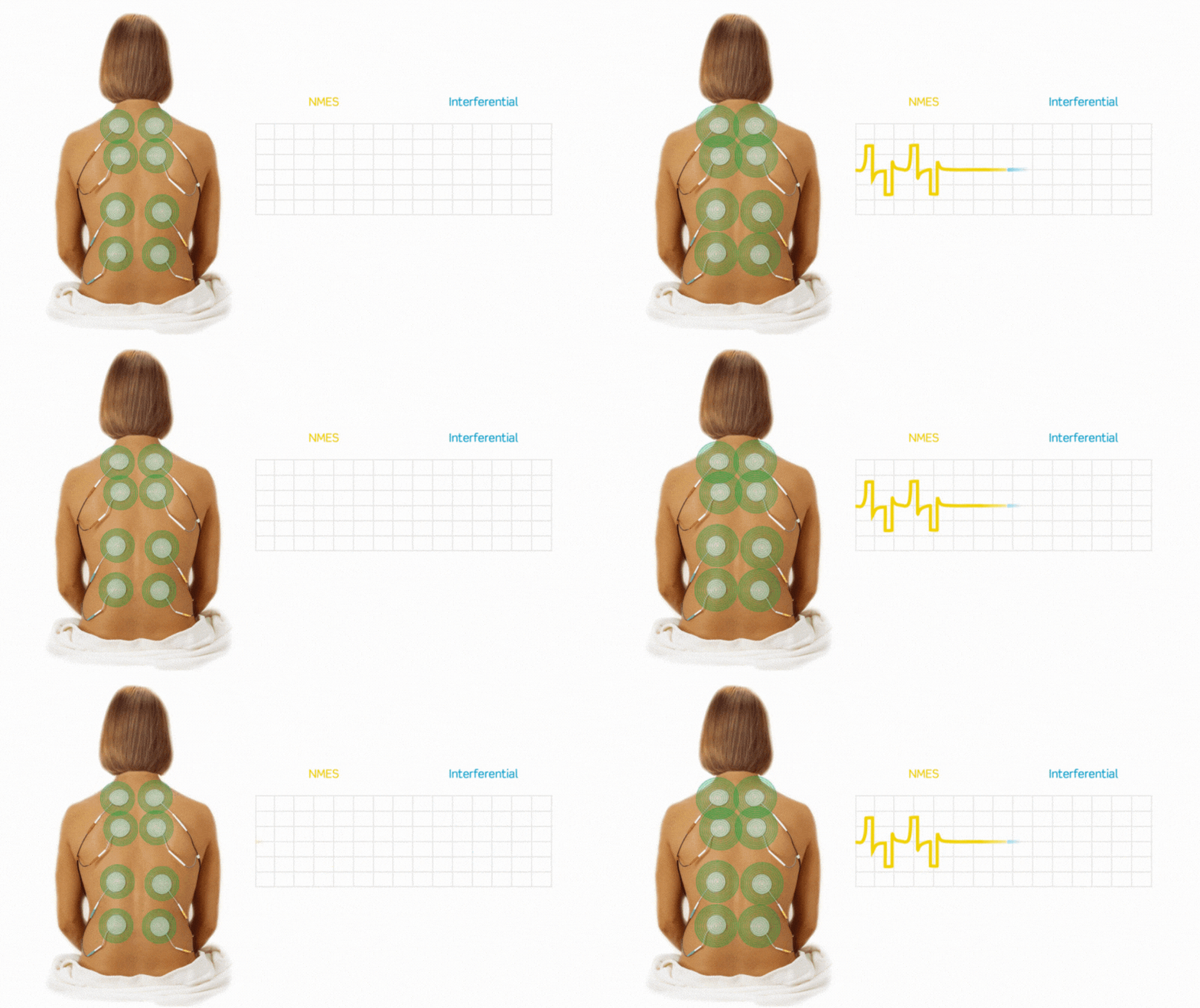
The third and most long-lived relief is endorphin release, and it generally requires a combination of IFT and NMES (see below). In this case, with enough electrical stimulation of nerve and muscle fibers over a large enough treatment area for a long enough period of time, the body sends a sequence of signals up the neo and paleo spinothalamic tracts into the brain and provokes a beta-endorphin release. These neuroinhibitors are long-chain peptides – endogenous opiates – that provide pain relief lasting up to 8 hours.
Muscle Conditioning
There is a wide range of muscle conditions that can be successfully treated with electrotherapy. Generally speaking, treatments apply electrical stimulation to mimic ordinary healthy bodily function (e.g., the blood pump mechanism of action) with the goal of rehabilitating affected muscles.
During muscle therapy, Neuromuscular Electrical Stimulation (NMES) causes lower motor neurons to fire, and many devices have their own waveforms. A sophisticated device like the RS-4i Plus <link>, for instance, uses an adjustable, custom square/asymmetrical spiked waveform with a frequency of 71 Hz that is able to activate both fast- and slow- twitch muscle fibers.
Activating fast-twitch muscle fibers, commonly found in extremities like arms and lower legs, can be accomplished by way of a quick, spiked waveform. Yet, these waveforms don’t stay on long enough in any cycle to trigger contractions in larger, slow-twitch muscle fibers like the in low back and upper leg. This requires another waveform – a wider waveform – to accomplish the goal. Combining both into the same program offers the best likelihood of results, where treatment can act on both muscle types within the same session.
Being able to stimulate a broader range of muscle fibers, especially large stabilizing muscles, allows the RS-4i Plus to elicit a maximal muscle contraction – which expels metabolic waste and supplies a flow of oxygen- and nutrient-rich blood to the muscles.
Conditions and symptoms include:
Muscle Spasm: Spasms may occur when muscle is overused, tired, previously injured or strained. They may also occur when muscle has been overstretched or held in the same position for an extended period of time. A spasm may involve part of a muscle, the whole muscle or even adjacent muscles. It may take the form of a cramp or simply present as pain.
Muscle Atrophy: Muscle atrophy occurs when muscles waste away primarily due to the lack of physical activity. This can happen when a disease or injury makes it difficult or impossible to move an arm or leg. A symptom of atrophied muscles is an arm or leg that appears smaller than its opposite, for example, after being in a cast or brace. Atrophy can also occur in larger muscle groups, including areas of the back, hips and upper legs. Its symptoms are typically muscle weakness and pain.
Poor Blood Circulation: A wide range of symptoms can indicate poor circulation. They can affect a person's quality of life and may even cause severe complications. Common symptoms include numbness and tingling in the hands and feet, cold hands and feet, swelling in the feet, ankles, and legs, fatigue, joint and muscle cramps.
Next Steps
Knowing that all electrotherapy devices are not the same is the first step in understanding the category. Taking a deeper dive into what makes them different reveals that there are varying therapeutic distinctions between devices, and these distinctions can be used to hone in on which device is the best for addressing a patient’s particular condition.
Some questions to consider when reviewing different devices:
What are the indications for use? If a device is indicated only for pain, it isn’t a good choice for muscle treatment. If muscle therapy is the goal, make sure it includes indications like relaxing muscle spasms, preventing disuse atrophy and re-educating muscle.
Does the device work on all muscle types? Recruiting both slow-twitch and fast-twitch muscle fibers is key to treating most muscle conditions. Be sure to review the waveforms before making a device selection.
Does the device offer a mix of high-frequency IFT signals and NMES muscle treatment? If so, these signals are best for achieving an endogenous opioid release for longer-term pain relief.
We Invite You to Learn More
Practitioners
If you are interested in a more detailed review of the RS-4i Plus mechanisms of action and clinical evidence, we invite you to request a demonstration.
Patients
The RS-4i Plus requires a prescription. If you are interested in discussing this drug-free pain relief solution with your healthcare practitioner, download our patient discussion guide to help start a conversation.